This year, RIFF pays tribute to its spectators introducing the Audience Award. The audience, the recipient par excellence and essential pillar of the cinema, will judge the films in competition. Spectators will be called directly to express their opinion on a special sheet of paper delivered at the beginning of the film. The vote will affect the sections of documentaries, italians and foreigners, which always have been the flagship of the Festival. The initiative aims to make the experience in the room more interactive and engaging, allowing the authors to receive direct and immediate feedback.

After her PhD in Cinema at the Third University of Rome, in 2005 she began collaborating with Fandango, dealing with documentaries and film acquisitions, and more recently with project development and cinema and TV production. She is the producer of “Black Moon” and “Luna Park”, series made for Netflix.
Among other activities, as a film critic she was the artistic consultant at the Bellaria Film Festival, preview for Italian independent cinema. She was a film selector for the Extra Section at the Rome Film Festival, and for the festival’s international competition. Currently part of the scientific committee at the Pesaro Film Festival.
Author of critical essays about Italian cinema and directors (Olmi, Taviani, Comencini, Bellocchio, etc…). Among her publications we can find “Peter Whitehead. Cinema Music Revolution”, a monographic volume edited together with Cristina Piccino (Derive e Approdi, Rome, 2008) and – together with Pedro Armocida – the collective volume “Romanzo Popolare. Narration, audience and stories of Italian cinema in the 2000s”, Marsilio, 2016.
She edited the volume “We Want Cinema. Women’s gazes in Italian cinema” (2018) for Marsilio. Author of the documentary “Ferrante Fever” (2017), directed by Giacomo Durzi and produced for Rai Cinema and Sky Arte, finalist at the Nastri d’Argento as best documentary.
In 2018, together with Simone Gattoni and Michael Weber, she founded the Similar Production Company in Rome, with which she made “Tommaso” by Abel Ferrara and with Willem Dafoe, presented Out of Competition at the Cannes Film Festival 2019, and co-produced “Töchter” (2021), directed by Nana Neul.

After earning degrees from the University of Pennsylvania and London International Film School, Carl began working professionally in film in New York City, getting his start with David and Albert Maysles. Over his career he has lived and worked throughout the US and Europe, producing and directing commercials, music videos, documentaries, short films, television films, and theatrical features. He wrote and directed the features “L’amico di Wang” (Italy, 1997), “The Wrong Mr. Johnson” (Czech Republic, 2008), was the original screenwriter on “Carlito’s Way” (USA, 1993), co-wrote and produced “Gryphon” (USA, 1990), co-produced the BAFTA award winning fake documentary “Punkkebab” (UK, 1978), and was a producer on the feature documentaries “D.O.A.” (USA, 1980) and “Mondo New York” (USA, 1988). Carl is based in Rome, developing a number of new films and TV series, and is the founder/director of the Rome International Film School, now in its 5th year.
Bijaya Jena is a National award winning filmmaker and a trained actress from one of the world’s top ten film schools, Film and Television Institute of India, Pune. After acting in several regional and Hindi films,Ismail Merchant’s British film The Deceivers and shows, she moved on to write, produce and direct her own films. Her debut feature film TARA (1992) got a National award and she was nominated for Best Actress. Her second feature ABHAAS (1997) is internationally acclaimed and was shown on C4, BBC in the Classics section. She has been on feature film jury in several international film festivals like Fajr,Kish,Roshd,Yerevan,Goa,Dhaka,Aswan,Kolkata and has also held script masterclasses in institutes like TUMO Academy, Armenia and Film and Television Institute of India, Pune and writes film reviews in her free time. She has also received the Odisha State Award for Best Actress and Lifetime Dedication Award from Odisha and Pinamar, Argentina.
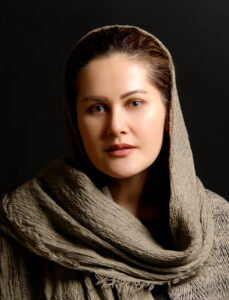
Born in 1985, Sahraa Karimi comes from the second generation of Afghan refugees in Iran. At the age of fifteen, she played as an actress in two Iranian films which brought her to study cinema in Slovakia and graduated with a PHD of directing. During these years, she has made more than 30 short fictions and documentaries, some of which won numerous awards in international film festivals.
After 10 years of making many shorts and documentaries, she returned to Kabul. She made two documentaries there which were successful internationally and were broadcasted through ARTE France and BBC. “Hava, Maryam, Ayesha” is her first feature film which was shot entirely in Kabul with Afghan actors.
Davide Mancini (1987) was born in Genoa. He attended the acting school of the Teatro Stabile of Genoa where he graduated in 2009. Right after graduation he began working in the theater, first with Marco Sciaccaluga in “Controtempo” and “The marriage of Mr. Mississipi”, then with many other directors such as Glusy Frallonardo, Massimo Mesciulam, Massimiliano Farau, Andrea Chiodi, Michela Lucenti and Stefania Panighini, with whom he staged “María de Buenos Aires”, a work by Astor Piazzolla.
In 2013 he won the Carlino d’Oro originality award at the XX Emerging Cabaret Festival.
He made his debut at the cinema in 2011, taking part in “I don’t know yet”, film by Fabiana Sargentini, followed by “The Golden Men” by Vincenzo Alfieri. Later we can find him in the cast of numerous television products such as “Rosy Abate” by Beniamino Catena, “Criminal love” by Maurizio lannelli, “Doctor Giò” by Antonello Grimaldi, “The two soldiers” by Marco Tullio Giordana, “Neverland” by Nick Willing, “Masantonio” by Fabio Mollo, “Petra 2” by Maria Sole Tognazzi and in the debut to television series of Marco Bellocchio with “Esterno notte”.
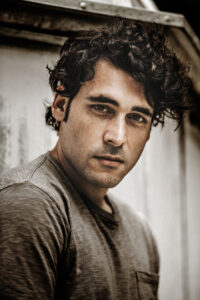
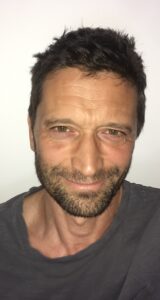
Gergely Pohárnok was born in Budapest, Hungary, in 1968. At the beginning of his career he works as a photojournalist and actor. His first experience as a cinematographer dates back to 1997. From 2007 to 2009, Pohárnok shoots several short films, among which 411-Z (2007), directed by Dániel Erdélyi, which receives a nomination for Best Short Film at Cannes Film Festival in 2008, and La partita lenta (2009), directed by Paolo Sorrentino, two awards winner at the Raindance Film Festival. The collaboration with Paolo Sorrentino makes him a name in the Italian industry, especially in top commercials, such as the successful campaign of Mulino Bianco with Antonio Banderas. Pohárnok’s first Italian feature film is Una vita tranquilla (2010) by Claudio Cupellini, that gets four nominations for the David di Donatello Award in 2011, and wins two awards at Rome International Film Festival in 2010. In 2012 he shoots Tutti i rumori del mare (2012) by Federico Brugia, followed by Miele (2013), by the popular actress and first-time director Valeria Golino. Miele collects 12 awards, among which the Golden Globe and a special mention at Cannes International Film Festival. Pohárnok is a member of HSC – the Hungarian society of cinematographers and a four times winner of the HSC – Kodak Cinematographer Award.
Wieland Speck is a German filmmaker, author and curator. Originally from Freiburg, he has lived in Berlin since 1972, studying German literature, drama and ethnology at Freie Universität and later filmmaking at the San Francisco Art Institute. From the 1970s onward, he came into his own as a publisher of men’s emancipation and gay movement literature, as actor, video artist and filmmaker, producing a number of short films and his award-winning feature film “Westler” (1985) which had a wide festival and cinema release as well as multiple German television broadcasts.
In 1982, Speck was appointed Deputy Director of the Berlin Film Festival’s Panorama section, headed by Manfred Salzgeber, and soon after founded the TEDDY AWARD – the Queer Film Award of the Berlinale. In 1992, he became Director of the Panorama Section of the Berlinale, a position he held for the next 25 years, until 2017.
In 2000 he co-directed the award-winning feature documentary “Escape to Life – The Erika and Klaus Mann Story” (with Andrea Weiss) which was selected for numerous international film festivals including Rotterdam, Jerusalem, Human Rights Watch, Full Frame, Seattle (where it won the Jury Award), and many others. It went on to have an art-house cinema release in Germany and the U.S.
Wieland Speck continues to work as a curator and juror at international film festivals. He has lectured at various institutes such as dffb, Film Uni Babelsberg, Freie Universität and Filmakademie Ludwigsburg. He has published articles on filmmaking, film marketing and script writing, and has been on-screen presenter for cinema programming on arte Television.
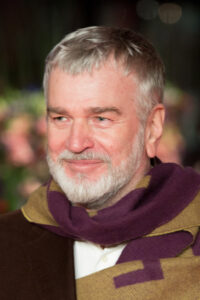
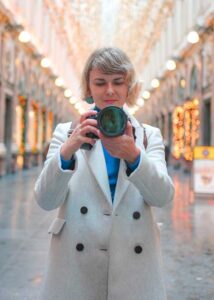
Anja Strelec is a Croatian director, documentary film maker, TV journalist, photographer and audiovisual artist who lives and works in Brussels. In her works, she mostly concentrates on social topics, portraying both individual human stories as well as society as a whole. Her multidisciplinary approach, working with a diversity of visual formats – documentary film, video and street photography – enables multifaceted storytelling.
Anja is a director of several award-winning documentary films shown at international festivals and TV channels in different countries. She exhibited her works at solo and group exhibitions in Croatia, France, Slovenia, Germany, Greece and Belgium. After graduating in TV Journalism at the Faculty of Political Science at the Zagreb University, Anja obtained a Master ‘s degree both in Audio-Visual and Film Production as well as in Audio-Visual and Film Directing from French universities Paul Valery III in Montpellier, and ESAV (Ecole Supérieure d’Audiovisuel) in Toulouse. For the last ten years, besides working as a director and together with her artistic work, Anja has been holding documentary film and audiovisual workshops in Europe, Africa and Asia, most notably for the European Commission and international organizations. In addition, she has been a selector (part of the selection committee) for several years now at the FIFB Film Festival, ‘Festival International du Film de Bruxelles’, and is often a guest lecturer at different universities and conferences.When she lived in Croatia, in parallel with working at the Croatian National Television, Anja directed several documentary films, as the most notably ‘Home is where my age is’, and ‘Abidance’ which have received numerous awards and were screened at film festivals and on TV worldwide. Both documentaries focused on local social topics. After moving to Brussels over six years ago, Anja continued researching and working on social topics, now on a global scale. In co-production with a production company from Nepal, ‘Mountain River Films’, she directed and filmed a documentary about Nepalese migrant workers, ‘Where have all the smiles gone’. Together with an NGO based in Brussels, GAMS (Group for the Abolition of Female Genital Mutilation) she is working on a documentary film about female genital mutilation, which is now in the stage of pre-production. Additionally, she works as a TV journalist for the Flemish TV station BRUZZ TV.
Copyright 2026 © All rights Reserved.